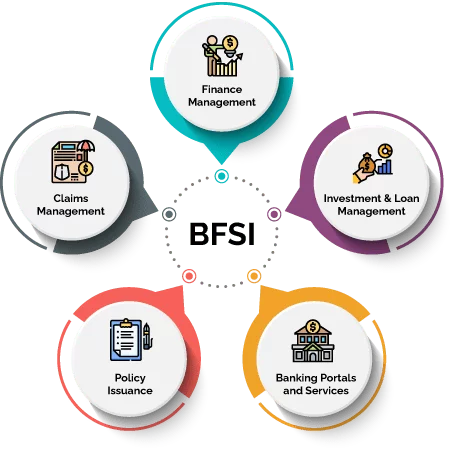
Banking and financial software development involves creating custom software solutions for financial institutions such as banks, credit unions, and investment firms. These solutions can range from simple applications for managing customer accounts to complex systems that handle trading and risk management for investment banks.
Banking and financial software development involve creating software applications that help financial institutions manage their operations, such as transaction processing, customer data management, risk management, and compliance. These software applications are designed to streamline processes, reduce costs, and improve customer service.
Some common types of banking and financial software include:
Core banking software - this software is the backbone of a bank's operations, managing transactions, accounts, loans, and customer information. Payment processing software - this software facilitates the transfer of money between accounts and financial institutions.
Risk management software - this software helps financial institutions identify, measure, and manage risks, such as credit risk, market risk, and operational risk. Trading software - this software is used by financial institutions to manage trades in various financial markets, such as stocks, bonds, and currencies. Compliance software - this software helps financial institutions comply with regulatory requirements, such as anti-money laundering and Know Your Customer (KYC) rules.
Banking and financial software development require specialized skills and knowledge of the financial industry and its regulations. Developers must also be familiar with programming languages such as Java, C++, and Python, as well as databases like Oracle and SQL Server. Overall, banking and financial software development is a crucial aspect of the financial industry and plays a significant role in improving efficiency, reducing costs, and enhancing customer experience.